Apple Removes Vibe Coding Apps
In May 2026, Apple removed two popular applications from the App Store—Replit and Anything. The reason was not due to malicious code, but because both apps were based on a model called Vibe Coding, which allows users to dynamically generate and execute code within the app.
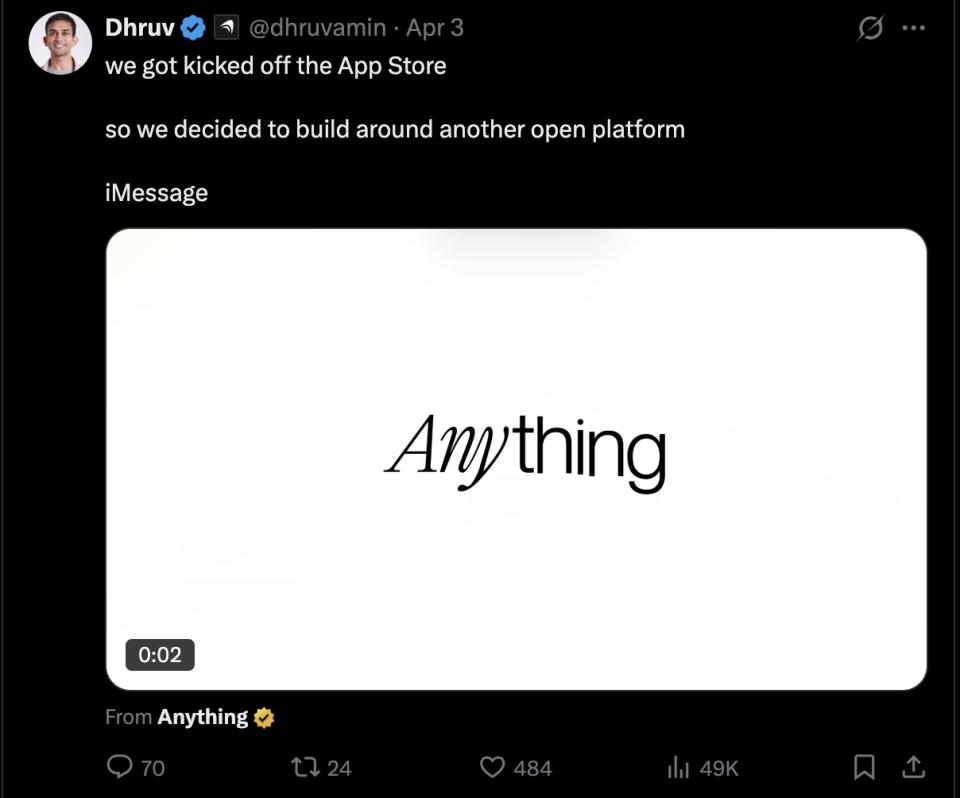
Apple believes this bypasses the pre-approval process of the App Store, posing potential security risks and violating its review guidelines.
This event reveals the underlying issues of Vibe Coding: it is an experiment in decentralizing development rights, and risk control must be a concurrent construction of this experiment’s ‘safety fence.’
Understanding Vibe Coding
The core of Vibe Coding is not about “AI writing code for you,” but rather a complete restructuring of the development process. Traditional programming is akin to going to the market (technology stack) to buy ingredients, then returning home (IDE) to cook (write code).
In contrast, Vibe Coding is like opening a food delivery app (e.g., Cursor, Claude Code) and describing your order in natural language: “I want a mildly spicy Kung Pao chicken, no peanuts, extra cucumbers” (your requirements). The AI kitchen receives the order and delivers a finished product.
This process is highly efficient. Data shows that using Claude Code can speed up daily functionality development by 40-60%, and generating test cases can be accelerated by over 70%. A simple function can be completed in just 2 minutes instead of the usual 10.
This “describe and receive” model shortens prototype validation from weeks to hours, allowing non-technical individuals like doctors and teachers to quickly build their own tools.
The Cost of Efficiency: Three Hidden Risks in the ‘Kitchen’
When you delegate the cooking to the AI kitchen, the risks shift to three areas:
- The ‘Chef’ may forget or deviate (Vibe Decay): Over long conversations, the AI may forget your initial instructions (e.g., “no peanuts”). Research shows that the code quality deteriorates, with AI-generated code being 40% more complex than human-written code, often filled with “code smells.”
More troubling, it may unilaterally alter core logic, making it hard to detect at a glance.
- The ‘Ingredients’ may be toxic (security vulnerabilities): The AI chef lacks an inherent alertness to security. A report from Veracode indicates that without explicit security constraints, approximately 45% of AI-generated code contains security vulnerabilities, with a defect density 1.7 times that of human code.
One scan even found that 1 in 5 applications rapidly built with Vibe Coding had severe vulnerabilities exposing sensitive user data. This is akin to using uninspected meat in the kitchen—while the dish may be cooked, it could lead to serious issues.
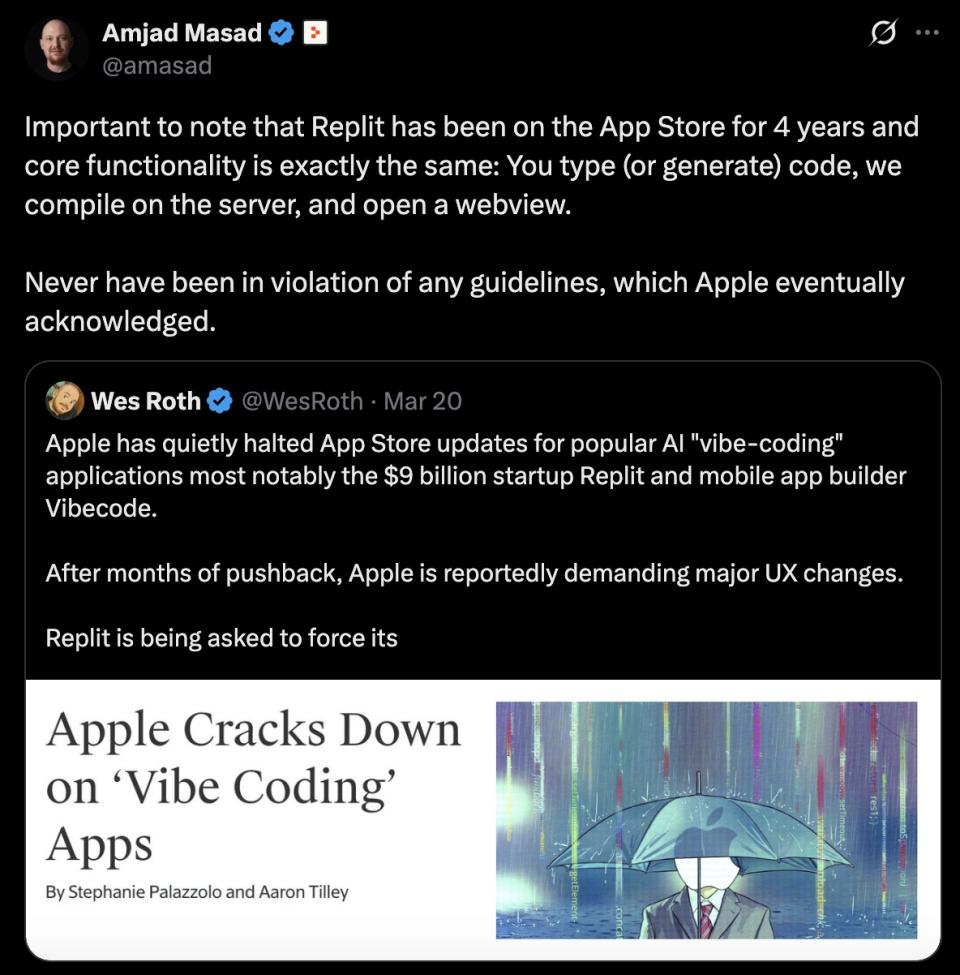
- The ‘Delivery Platform’ has rule restrictions (compliance risks): The removal of these apps highlights the fundamental conflict between platform rules and this new model. Apple’s App Store operates like a market that only allows pre-packaged food sales, requiring each “food item” (app) to pass all quality checks before being listed.
However, Vibe Coding apps allow users to customize the “recipe” (dynamically generate code) after purchase, completely overturning the platform’s control logic. Consequently, apps like Replit had to compromise by moving the “cooking preview” process outside the store to a browser, resulting in a disjointed user experience.
The Path to Balance: Establishing an ‘Intelligent Restaurant’ Management System
So, how can we enjoy the convenience of food delivery while ensuring safety and compliance? The answer is not to abandon ordering food but to establish a comprehensive quality control system from ordering to delivery. This requires collaboration among users, toolchains, and industry processes.
First, users must become ‘discerning diners.’ You cannot simply say, “Just bring me something to eat.” Effectively utilizing Vibe Coding’s core capabilities requires transforming vague ideas into precise instructions through problem definition skills. This means clearly stating background, constraints, and acceptance criteria in your prompts.
Additionally, you need context management skills to oversee the AI’s “memory,” timely clearing irrelevant dialogues to avoid confusion in the kitchen. Finally, you must possess result validation skills, ensuring that AI-generated code undergoes your manual “taste test”—reviewing core logic, running tests, and checking edge cases before use.
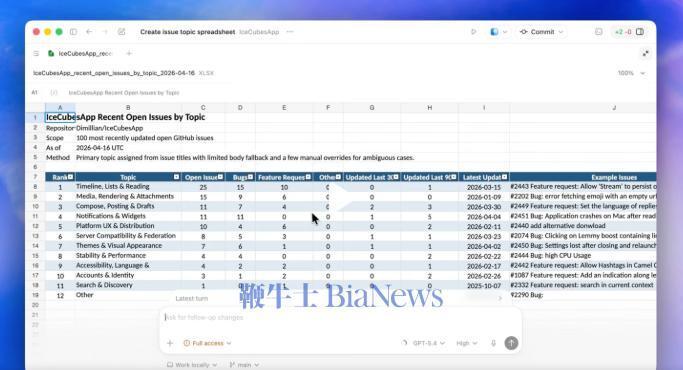
Second, toolchains must upgrade to ‘intelligent kitchen management systems.’ Good tools are actively addressing risks. For instance, Cursor’s “Plan Mode” allows the AI to think through solutions before coding, improving code quality by threefold. Newer tools like Codex have introduced “memory” capabilities to remember your preferences and project rules, reducing forgetfulness.
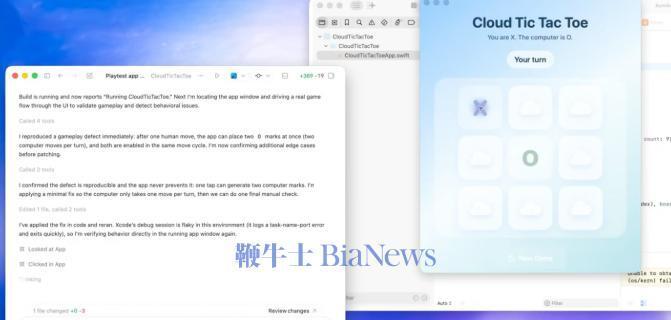
More importantly, toolchains are beginning to integrate automated quality inspection modules. For example, before code submission, tools like Biome automatically perform static scans, acting like metal detectors to identify potential performance issues and security vulnerabilities.
Finally, the industry needs to establish ‘standardized food safety regulations.’ In team collaborations, a specialized review process for AI-generated code must be established.
A viable model is a three-tier review mechanism: First, AI (like CodeRabbit) conducts an automatic initial screening to quickly identify superficial issues; second, developers fix problems and explain the reasons; third, and most importantly, manual final review focuses on architectural design and core business logic, especially for sensitive code like payments and permissions, which must be 100% manually verified.
Conclusion: Returning from ‘Magic’ to ‘Engineering’
The balance of Vibe Coding does not lie in finding a perfect switch, but in recognizing that the efficiency leap it brings is ‘magic,’ while controlling its risks must rely on solid ’engineering.’
This means developers cannot indulge in the pleasure of “wishing on AI” but must deeply understand the business, rigorously define requirements, and strictly verify results. The evolution of tools and processes aims to automate and seamlessly integrate this necessary rigor into a fast-paced development pipeline.
Ultimately, Vibe Coding will not render programmers obsolete, but it will redefine their roles: from hands-on cooks to quality control experts and skilled AI trainers. This experiment in balancing efficiency and risk tests our wisdom in harnessing new production tools and building safety barriers around them.
Comments
Discussion is powered by Giscus (GitHub Discussions). Add
repo,repoID,category, andcategoryIDunder[params.comments.giscus]inhugo.tomlusing the values from the Giscus setup tool.