OpenAI Capitalizes on Anthropic’s Fallout
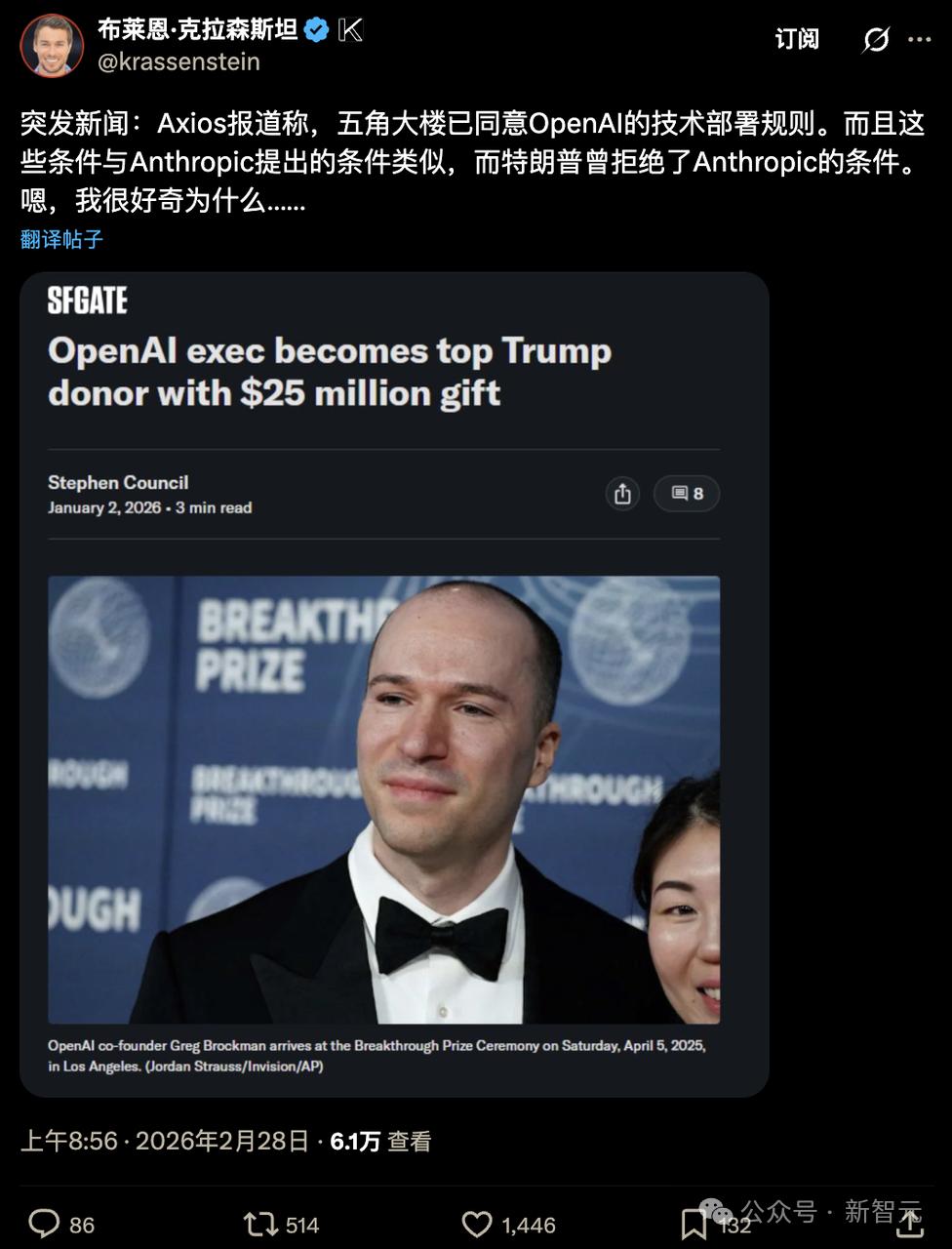
The U.S. Department of Defense has just blacklisted Anthropic, allowing OpenAI to step in and secure contracts with the military. OpenAI established the same safety boundaries as Anthropic but managed to win the contracts by emphasizing cloud deployment of models. This has led to public outrage, especially after it was revealed that OpenAI’s president donated $25 million to Trump’s campaign, raising suspicions of political manipulation behind the ban.
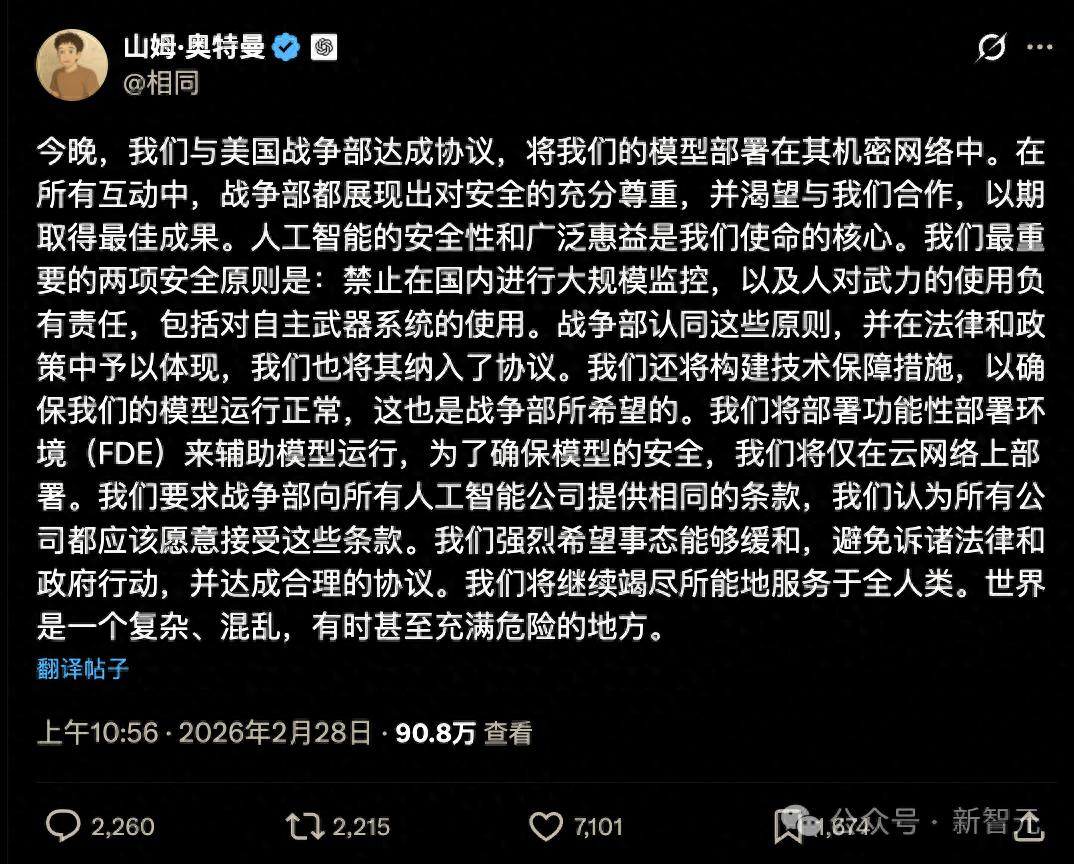
The situation is further inflamed by the fact that OpenAI set the same safety standards as Anthropic, yet was able to secure military contracts simply by stressing cloud deployment.
This blatant double standard has sparked global outrage. Following the news of OpenAI’s political donations, many users are calling for a boycott of ChatGPT and shifting to Claude, which has now risen to the top of the App Store charts.
The Cost of Sticking to Principles
Anthropic’s Stand and the White House’s Backlash
Anthropic has faced severe commercial and political consequences for refusing to compromise on the militarization of AI. Founded by former OpenAI members concerned about AI safety, the company has positioned itself as a moral benchmark in the industry.
Despite weeks of pressure from the Department of Defense, Anthropic maintained its firm stance against using AI for domestic mass surveillance and integrating it into lethal autonomous weapon systems. CEO Dario Amodei publicly rejected the Department’s demands for broad terms allowing AI models to be used for “all lawful purposes.”
This steadfastness was viewed as an intolerable political provocation by Washington politicians. President Trump issued a statement demanding all federal agencies cease using Anthropic technology immediately.
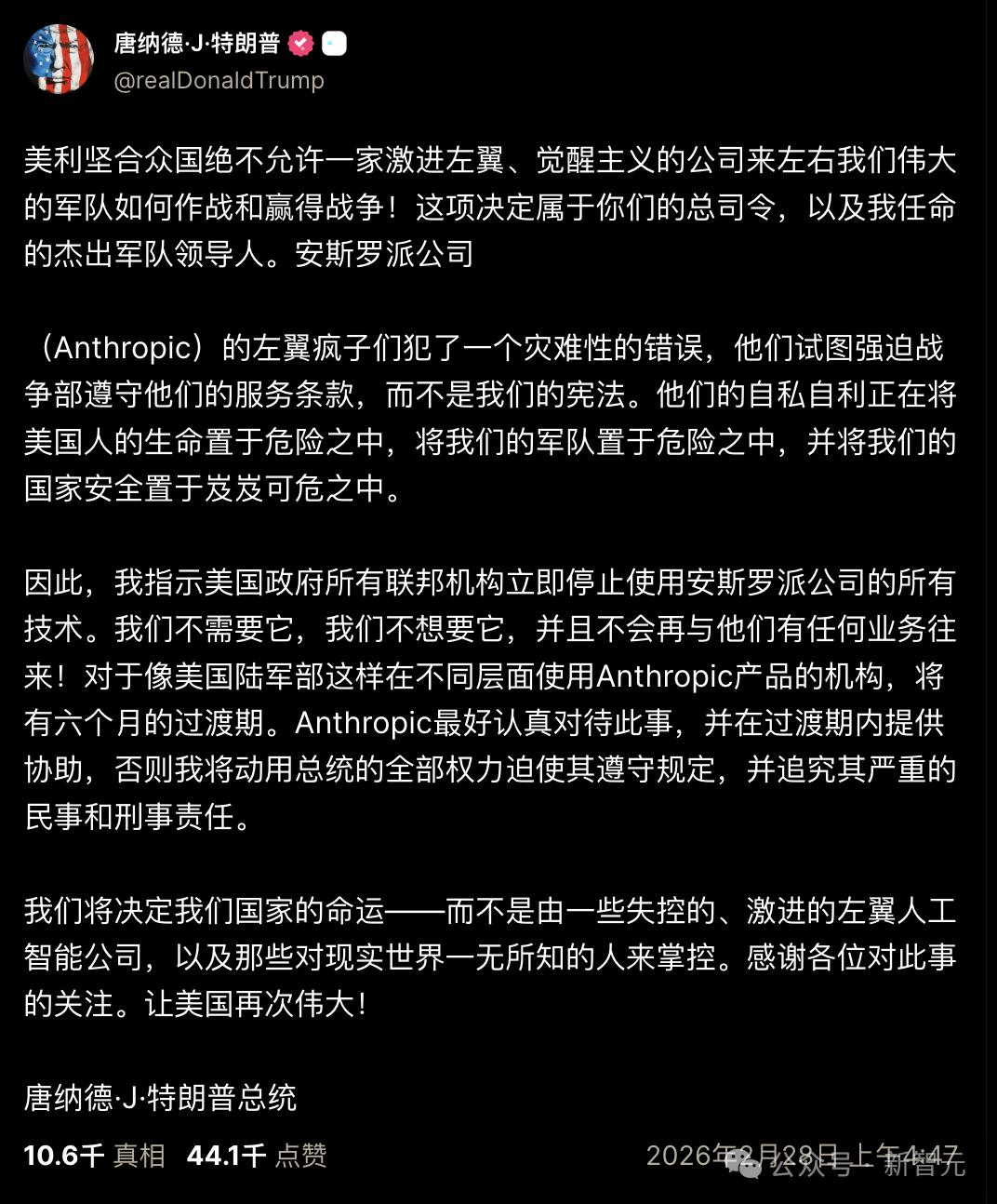
The statement was aggressive, claiming that the U.S. would not allow a radical leftist company to dictate the military’s combat and victory methods. He urged the Department of Defense to phase out Anthropic’s products within six months and threatened severe civil and criminal liabilities.
The Secretary of Defense, Pete Hegseth, escalated the situation by canceling a $200 million contract signed last June and labeling Anthropic a “supply chain risk.”
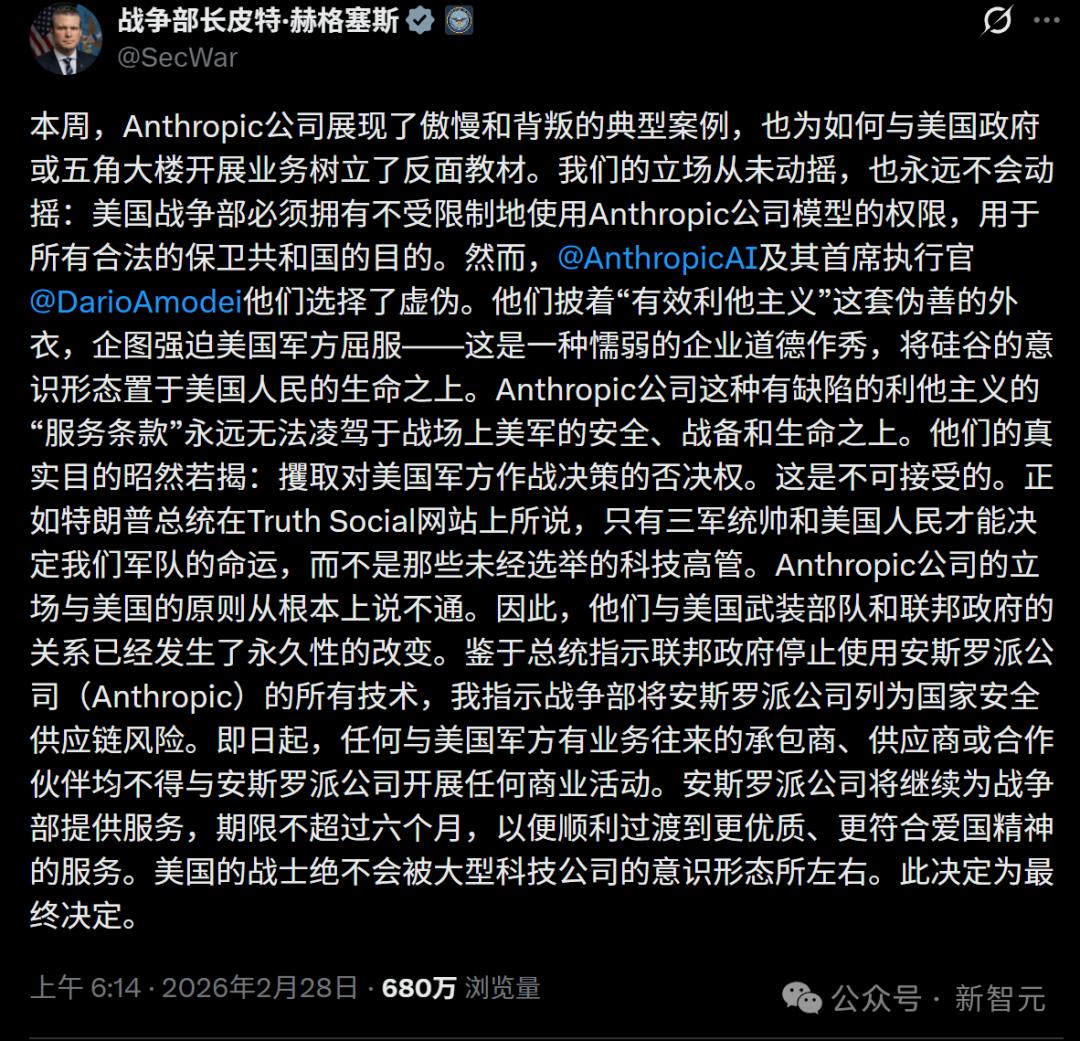
In this storm, high-ranking officials like Deputy Secretary of Defense Emil Michael publicly criticized Dario Amodei on social media, accusing him of having a god complex and attempting to override the system. The official bluntly warned that a profitable tech company should not impose its values on military decisions.
Faced with pressure, Anthropic chose to stand firm, with Amodei stating in a recent interview that the ability to disagree with government decisions is a core value of the country. They chose human safety over a $200 million contract.

The Stark Double Standard
OpenAI’s Pragmatic Facade
In contrast to the treatment of Anthropic, the Department of Defense showed OpenAI astonishing leniency and a blatant double standard. Just hours after Anthropic was dismissed, OpenAI stepped in under nearly identical conditions, perfectly filling the commercial void.
Sam Altman, OpenAI’s CEO, stated in internal memos that the company also opposes using ChatGPT for mass surveillance and autonomous weapons. To make this commitment appear reasonable, they cleverly utilized the distinction between “cloud” and “edge environments” to set up barriers.
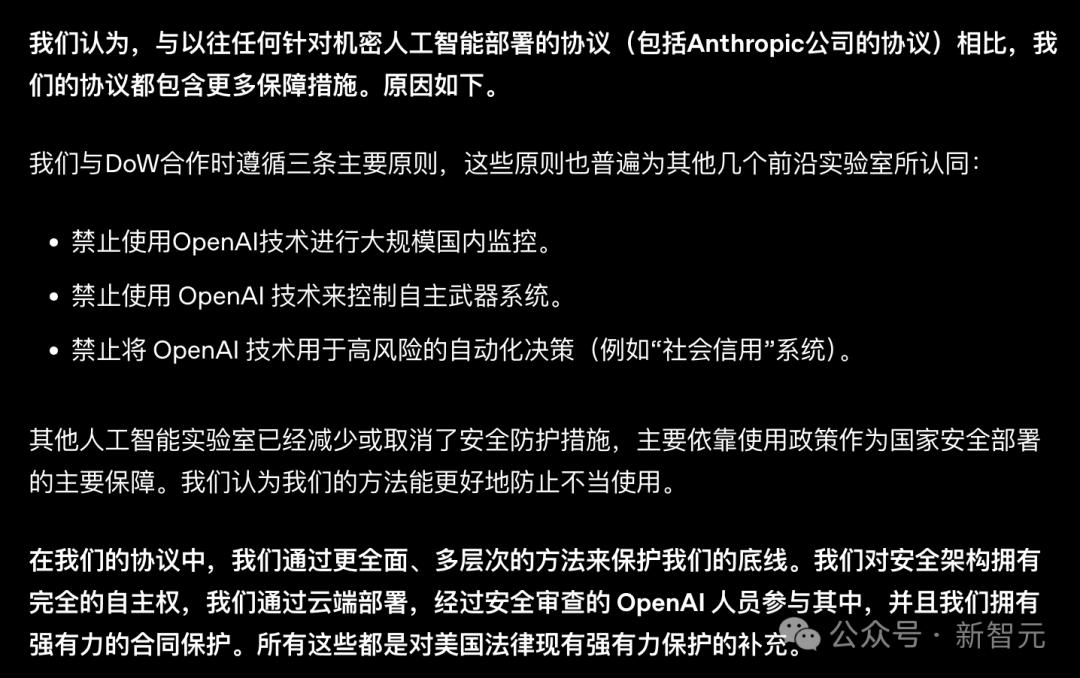
OpenAI’s technical defense is a masterful play on words. They promised to restrict models to the cloud, claiming this would physically increase the difficulty of using AI for frontline combat drones and other edge devices, thus achieving a so-called technical risk isolation without angering the military.
The government even greenlit OpenAI to build its own “safety stack” and retain control over model deployment locations and versions. OpenAI also offered to send specially licensed personnel to collaborate with government departments as an additional safety measure.
While Anthropic faced a presidential ban and total shutdown, OpenAI received a valuable government pass. Recently, OpenAI announced a new funding round totaling $110 billion, with a pre-investment valuation soaring to $730 billion, backed by major investors like SoftBank, Nvidia, and Amazon.

Through a long-term strategic partnership with Amazon, OpenAI overcame previous barriers to entering government cloud environments.
The Political Donations Behind OpenAI’s Success
The Money Exchange Behind the Revolving Door
The reason OpenAI has miraculously avoided political pitfalls in the current administration is closely tied to Greg Brockman’s substantial political donations. The OpenAI president and co-founder has become one of Trump’s largest donors, contributing $25 million to a super PAC supporting Trump.
This was just the beginning; the couple also donated $25 million to a bipartisan AI super PAC called Leading the Future and pledged an additional $25 million by 2026.
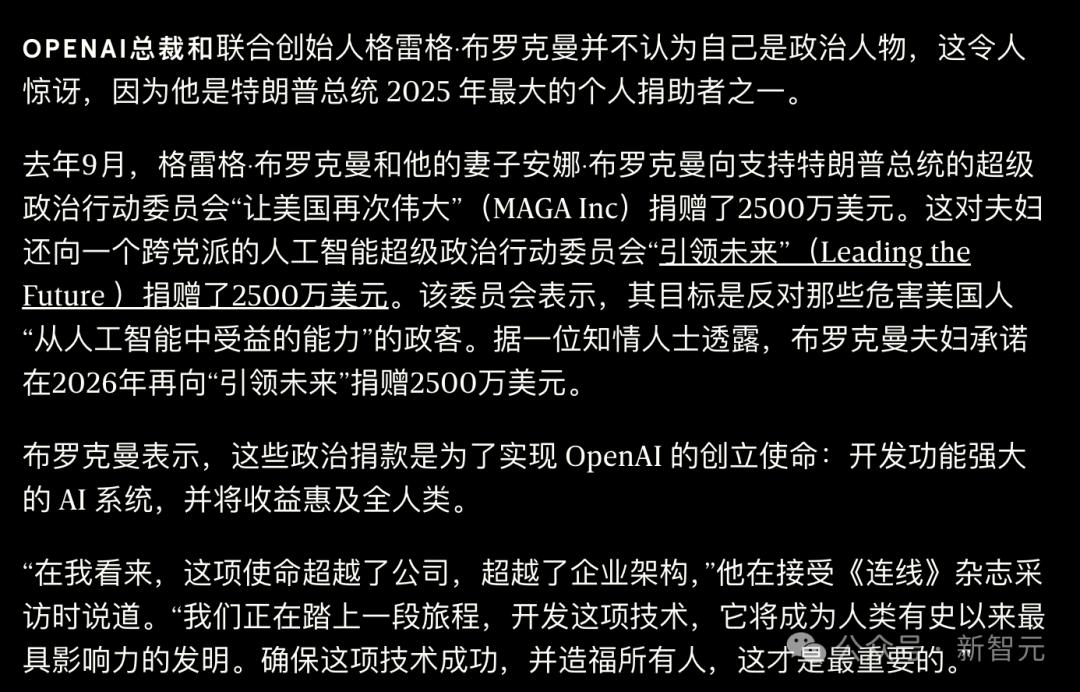
This astonishing transfer of wealth has built a robust invisible bridge between Silicon Valley and Washington. Brockman has framed this behavior as fulfilling OpenAI’s founding mission, packaging it as a political investment in support of the “human team.”
This investment has yielded immediate returns. Amid Trump’s push for AI development, OpenAI not only secured military contracts but also benefited from government promises to streamline data center licensing processes.
When Department of Defense officials looked at Anthropic, they saw a stubborn, ideologically driven entity. When they looked at OpenAI, they saw a leading tech supplier willing to play the power game.
The Ideological Clash and Musk’s Interference
Unprecedented Division in Silicon Valley
This battle over the future of AI is also a profound ideological clash, with billionaire Elon Musk intervening. He retweeted the Secretary of Defense’s comments, directly accusing Anthropic of hating Western civilization.
This statement quickly gained thousands of likes and shares on social media, escalating tensions. Musk’s criticism targeted a principle in Anthropic’s earlier “Claude Constitution,” which required AI to prioritize answers that would be least likely to be deemed harmful or offensive by non-Western cultural traditions.
This was viewed as evidence of serious bias by Anthropic in its value orientation. Musk’s incendiary remarks further deepened the divide, yet employees in Silicon Valley showed unprecedented solidarity.
Hundreds of employees from OpenAI and Google rallied in support of Anthropic, even signing a joint open letter titled “We Will Never Divide,” with former OpenAI chief scientist Ilya also expressing support.
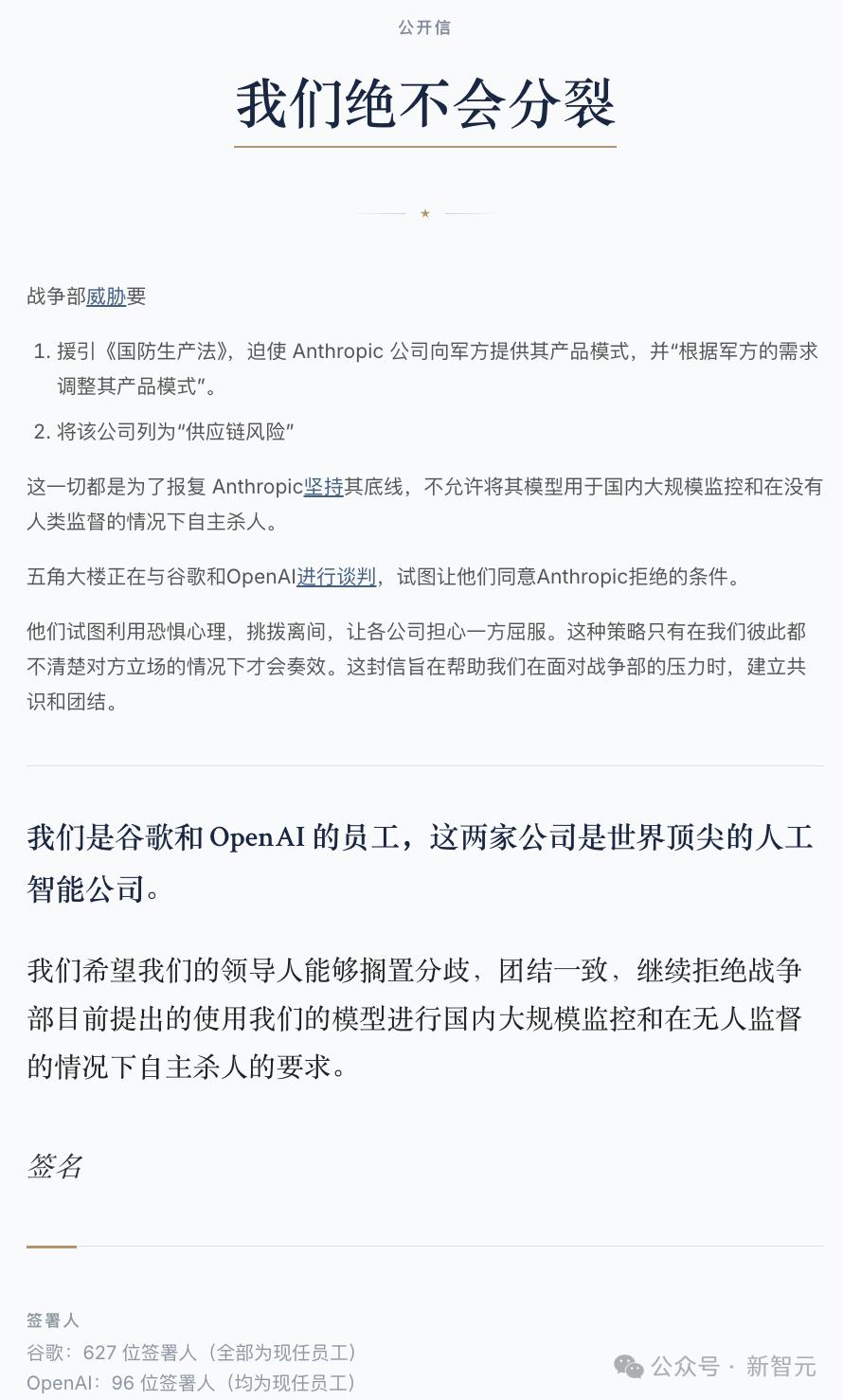
In the letter, employees pointed out that the Department of Defense’s attempts to use fear to divide companies would only succeed if everyone remained disconnected. They aimed to build consensus through the letter to collectively resist the Department’s pressure.
Amid external attacks, internal value conflicts at OpenAI were also rapidly worsening. Recent violent incidents involving U.S. Immigration and Customs Enforcement personnel highlighted these internal contradictions.
When executives from Anthropic and Google DeepMind publicly condemned these violent events, OpenAI’s leadership remained notably silent. Sam Altman cautiously remarked in an internal Slack channel that the situation had become somewhat excessive, while also expressing encouragement from the president’s response.
The clash between real interests and moral ideals was vividly displayed within OpenAI.
The QuitGPT Movement
Elevating Claude to New Heights
OpenAI’s hypocritical behavior and indifference to violence are triggering an unprecedented crisis of trust and market backlash. The executives’ political alignment has outraged the public, leading to a massive protest movement called QuitGPT.
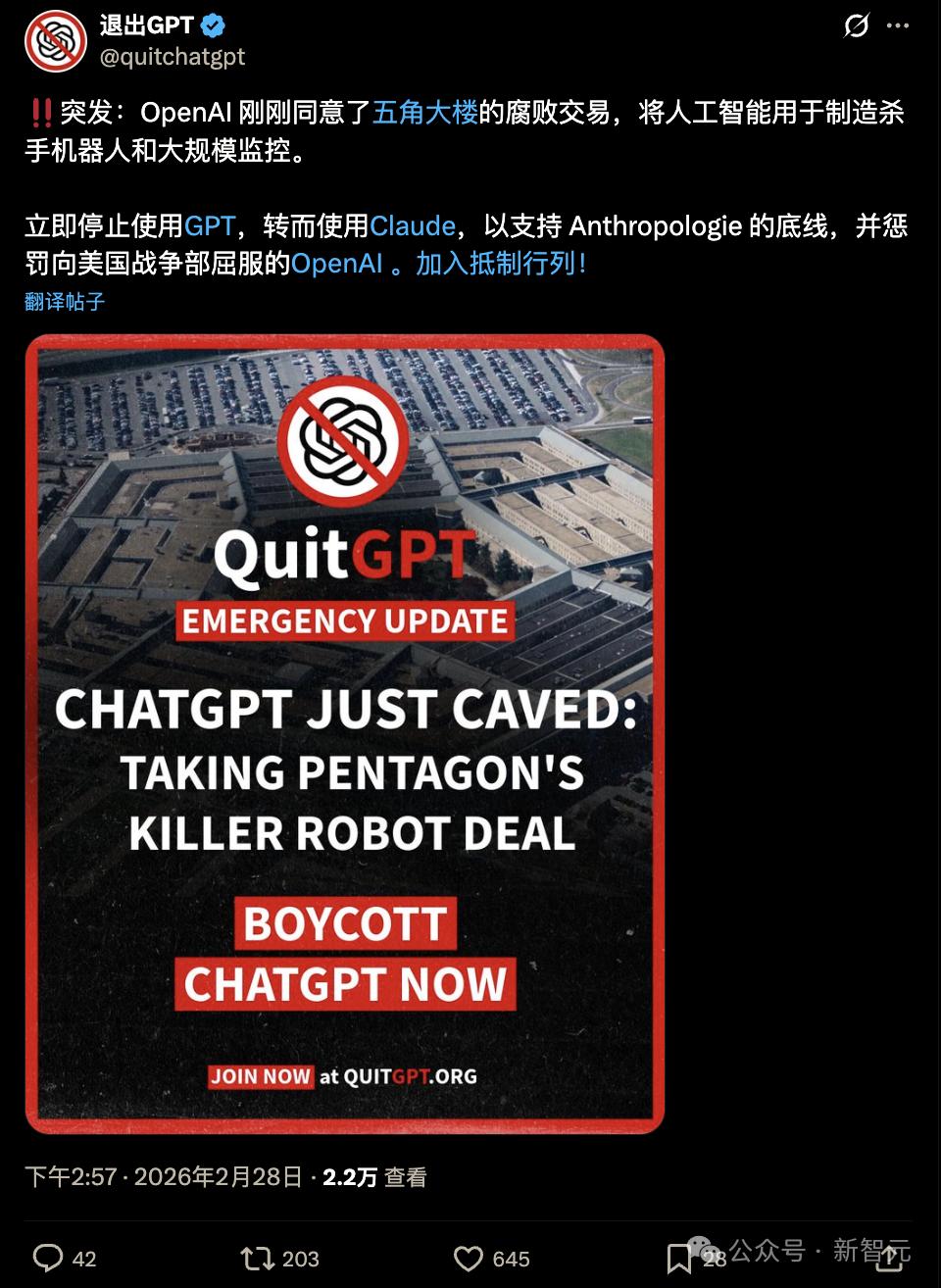
Users have pointed out that supporting OpenAI equates to supporting unchecked violence and mass surveillance. OpenAI’s once-cherished user base has now become its greatest vulnerability.
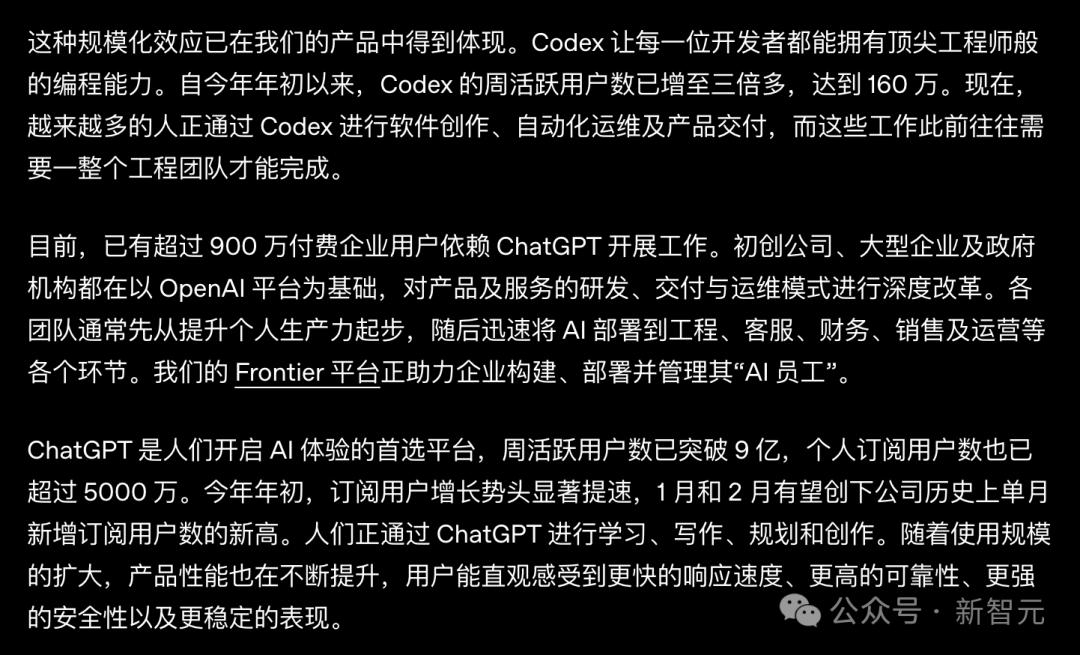
According to OpenAI’s official data, ChatGPT’s weekly active users have surpassed 900 million, with over 50 million individual subscribers and more than 9 million paid enterprise users relying on it for work.
Users are awakening to the reality that their subscription fees are indirectly funding political donations supporting violent enforcement and the military-industrial complex. This has accelerated the wave of uninstalls.
Users are beginning to vote with their feet. On platforms like X and Reddit, netizens are posting calls for a complete boycott of ChatGPT. Over 700,000 people have signed a boycott agreement, and social media is flooded with screenshots of uninstalls and posts condemning OpenAI.
In this powerful grassroots movement, the public is turning to Claude, which has seen explosive growth in downloads, soaring to the top of the App Store free charts within days.

Conclusion
OpenAI is undergoing a profound transformation, evolving from a technology lab born under a non-profit halo into a giant commercial empire deeply entwined with geopolitical maneuvering and power-seeking.
In this era of capital and power intermingling, the quality of technology has taken a back seat; what truly matters is who understands Washington’s unspoken rules better. The black box of code has ultimately opened its doors to power, and while technology can calculate the probabilities of changing the world, it can never measure the depths of human nature intertwined with interests.
Comments
Discussion is powered by Giscus (GitHub Discussions). Add
repo,repoID,category, andcategoryIDunder[params.comments.giscus]inhugo.tomlusing the values from the Giscus setup tool.